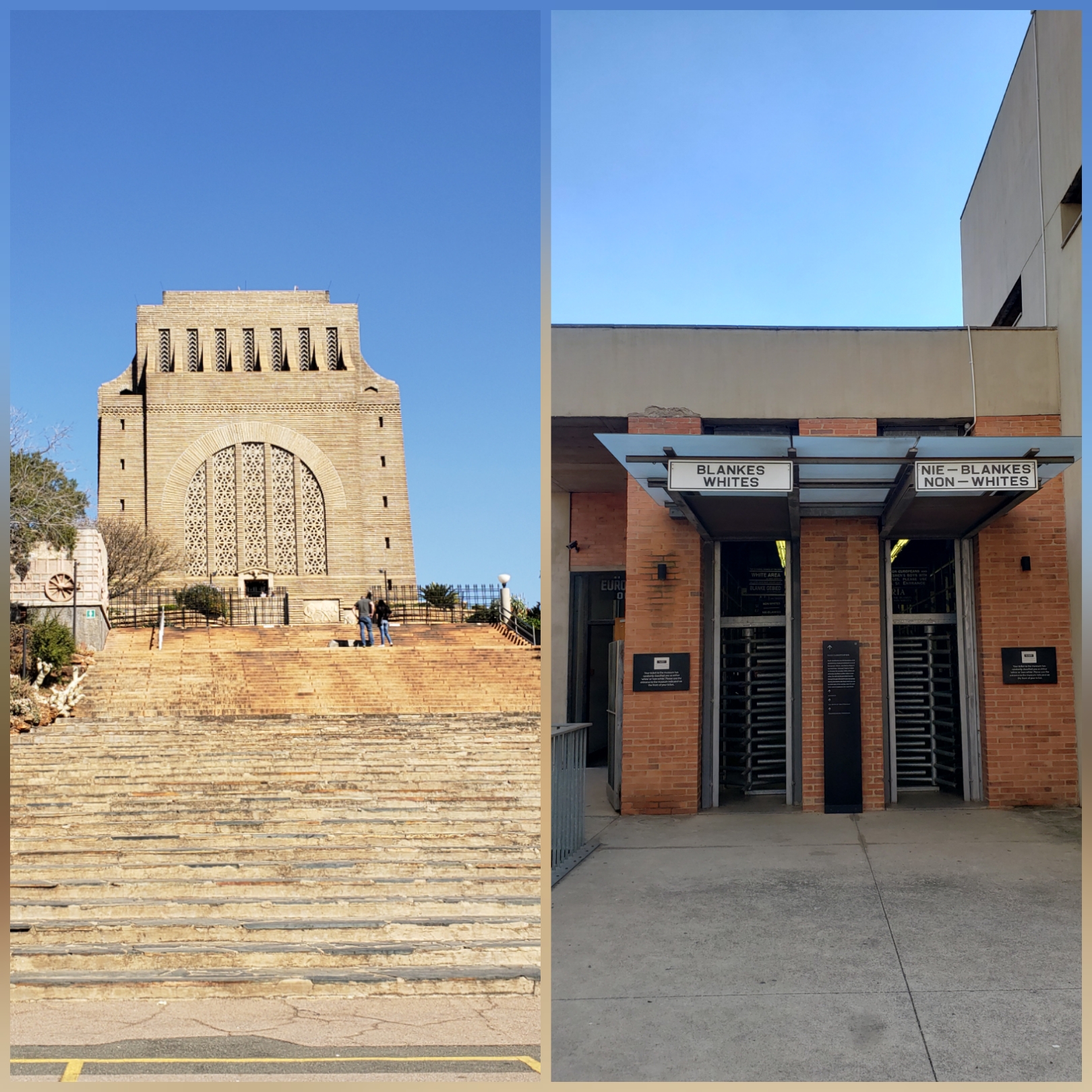
Perspective Matters: The Apartheid Museum & Voortrekker Monument

Until the story of the hunt is told by the Lion, the tale of the hunt will always glorify the hunter.  

African Proverb

Perspective matters in every narrative. If one visits the Voortrekker Monument the tale of White imperialism by Afrikaners would have a completely humane perspective. One’s indoctrination would include rhetoric heavily based on family, women’s tenacity, their resourcefulness and roles in the collective’s survival. Violence against Black South African tribes is mitigated and explained as retaliatory acts of self-defense. The resulting marginalization, racial othering and years of subjugation non-white South Africans experienced are never mentioned on the museum walls or by the tour guide.
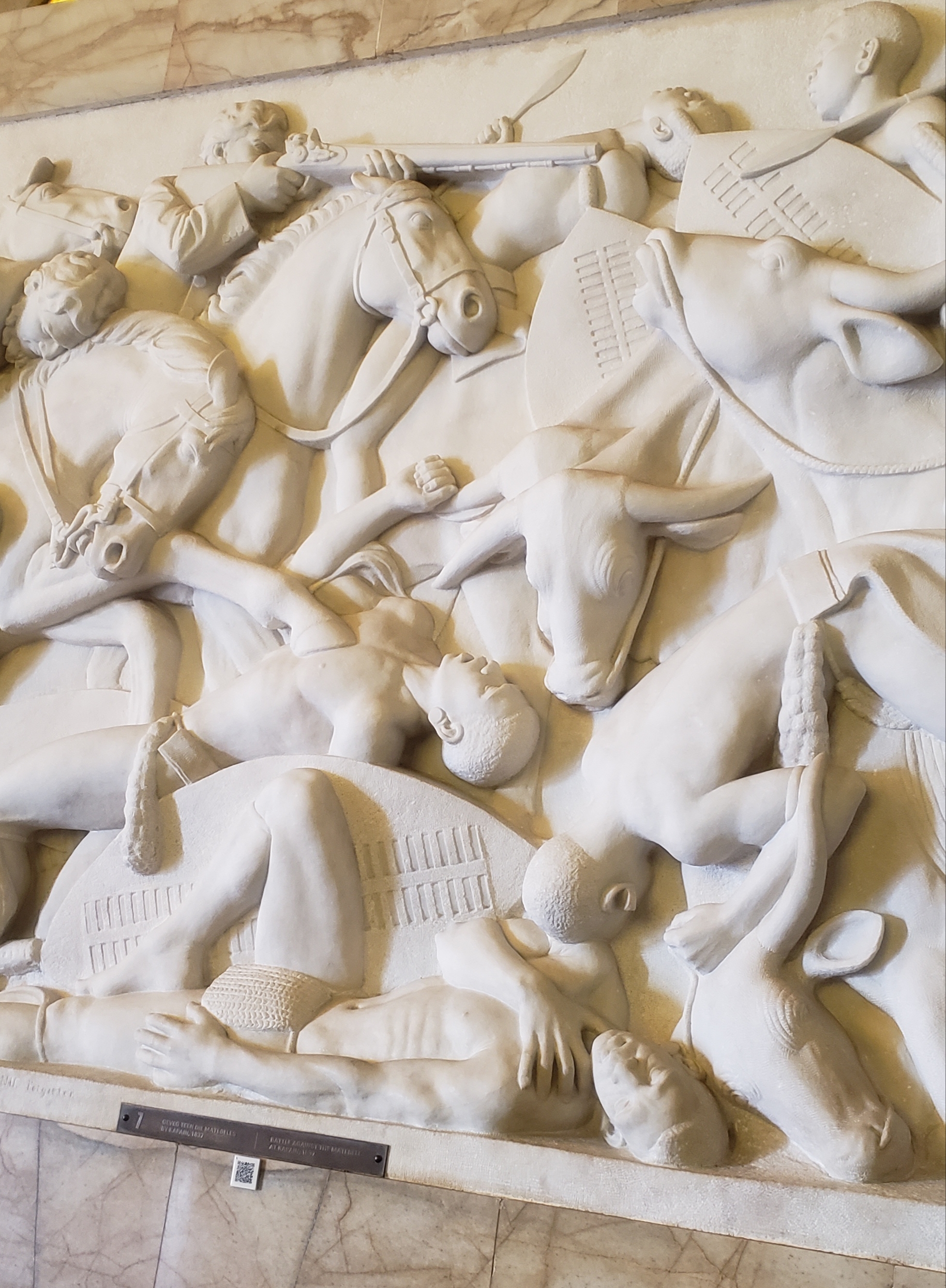
Depiction of retaliatory violence espoused, by the tour guide, as historical fact through the Voortrekker’s halls.

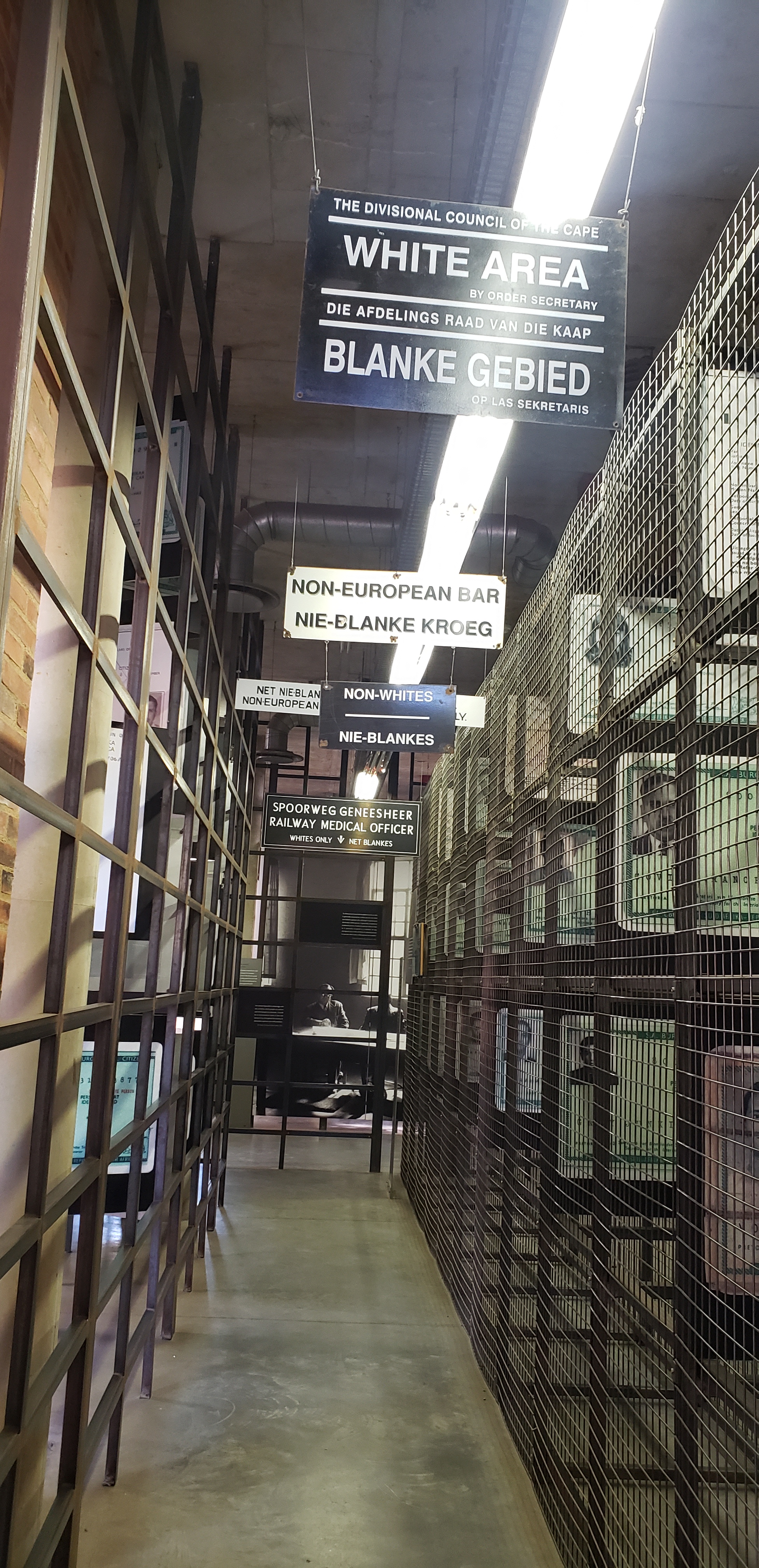
Conversely, the Apartheid Museum documents the systemic subjugation of non-white South Africans. The focus is not on the trek but the lives of the marginalized and the ways the governmental system made it permissive. From entering the museum through racialized door labels, to viewing the various forms of identification cards, and the ways dark bodies were cataloged and codified, the racial animus and oppression directed towards non-white South Africans is evident.
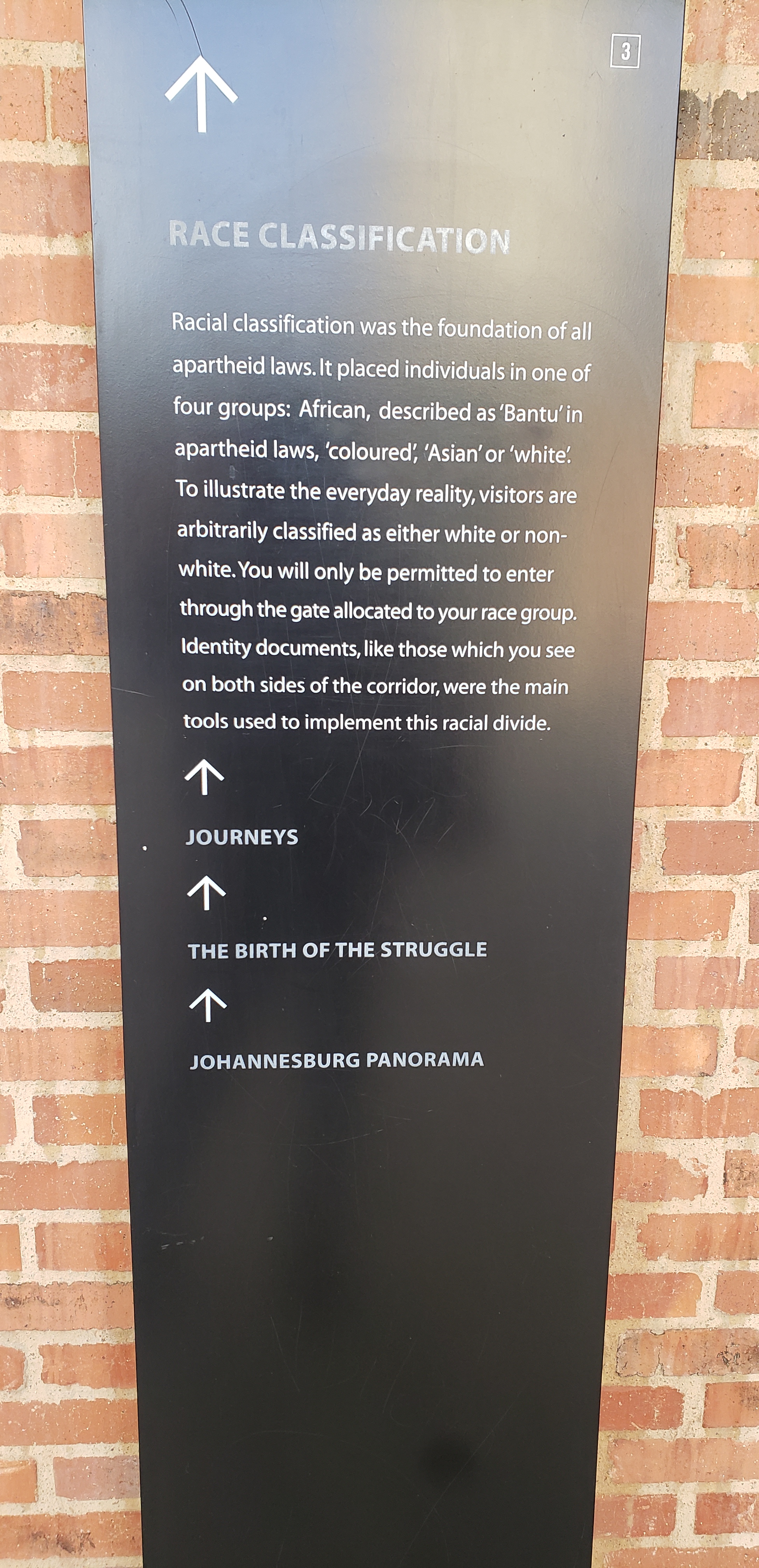
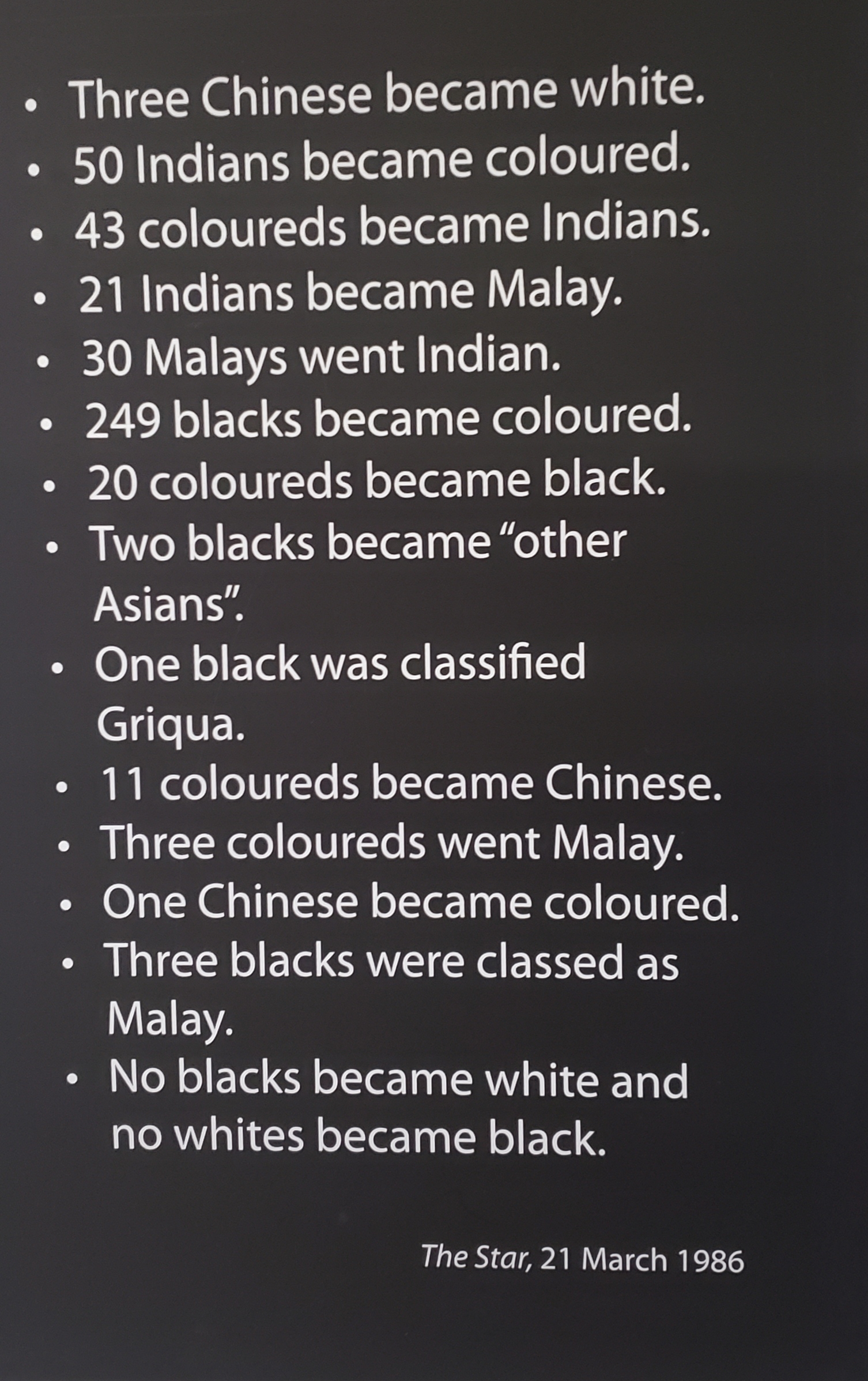
Racial Classification- Apartheid Museum
The above governmental racial cataloging of South Africans demonstrate migration across racial lines with clear delineation that Black can never become White and vice versa. – Apartheid Museum
Apartheid Museum’s depiction of the systematic marginalization of non-white South Africans

Even the structures and their locations convey different narratives; one of access, privilege and wealth as evidenced and one that is not. The expansive views atop the Voortrekker monument seen in the video below provides context:

Designed by Gerard Moerdijk, attention to details such as the thirty two (32) sun rays that form the perimeter of the cenotaph when looking down from the sky dome, reveal the ways in which imperialism is celebrated and an alternative historical tale is narrated. Moerdijik’s design is also intended to permit a ray of sunlight to shine on the cenotaph at twelve o’clock on December 6th every year. The ray falls on the center and strikes the words ‘Ons vir Jou, Suid-Afrika’ which is Afrikaans for ‘We’re for you, South Africa.’ It marks the day the monument was open, the Vow of the Trekkers and symbolizes their connection to their God.
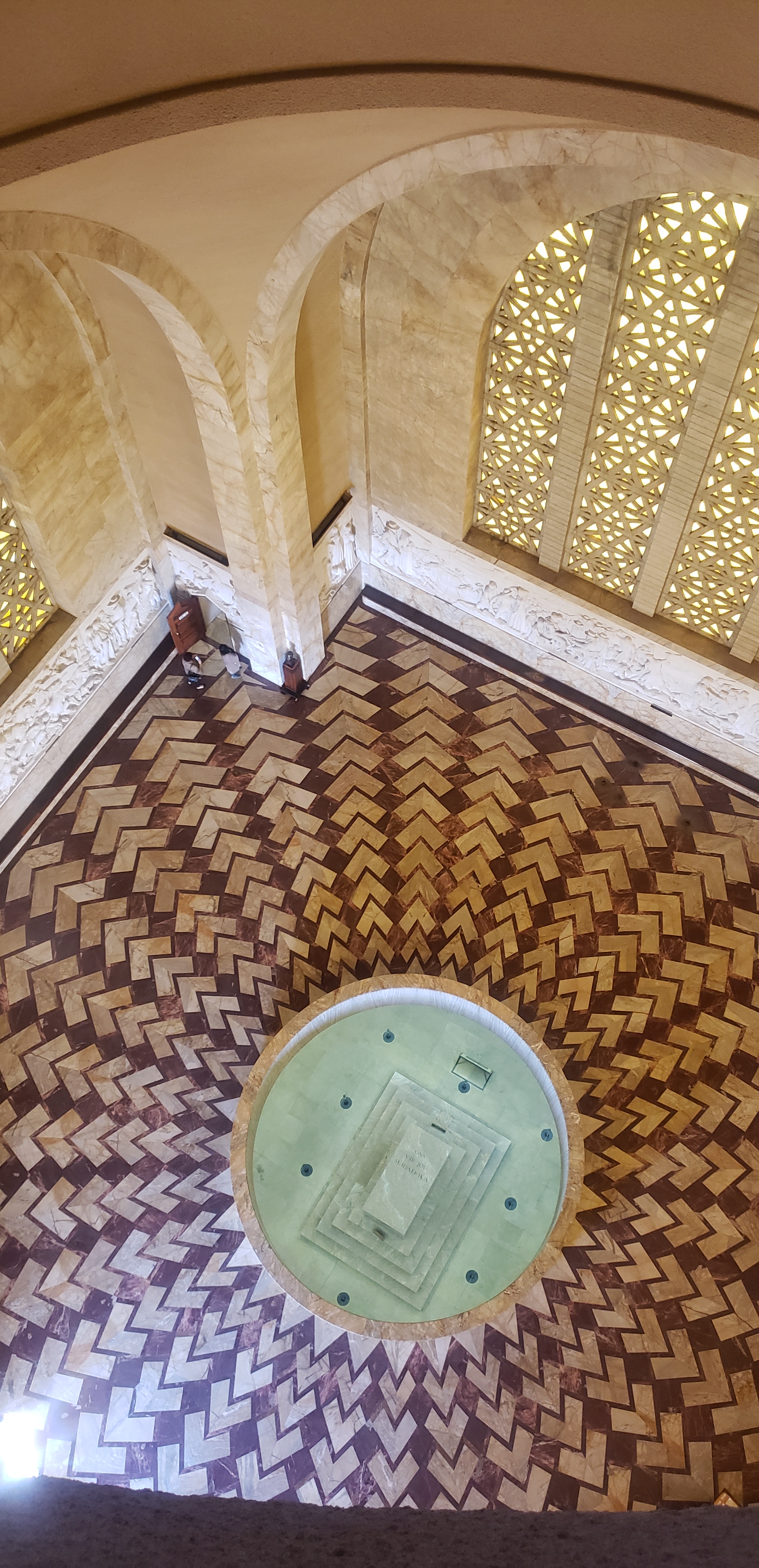
Cenotaph in the Voortrekker Monument

It is not a secret that the architects of the Apartheid system drew inspiration from America’s Jim Crow/Segregation era. Yet, when tales of Apartheid is mentioned, America’s role in its origin is seldom discussed. The narrative is often heavily rooted in a purely South African history; demonstrating another way perspective matters.
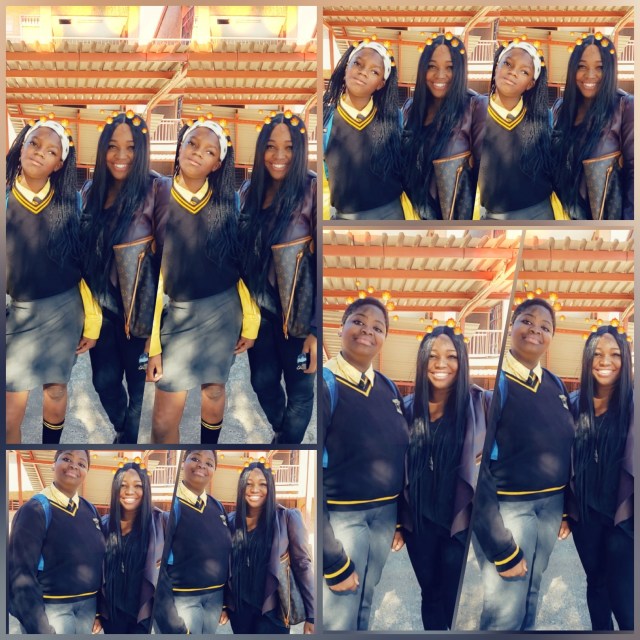
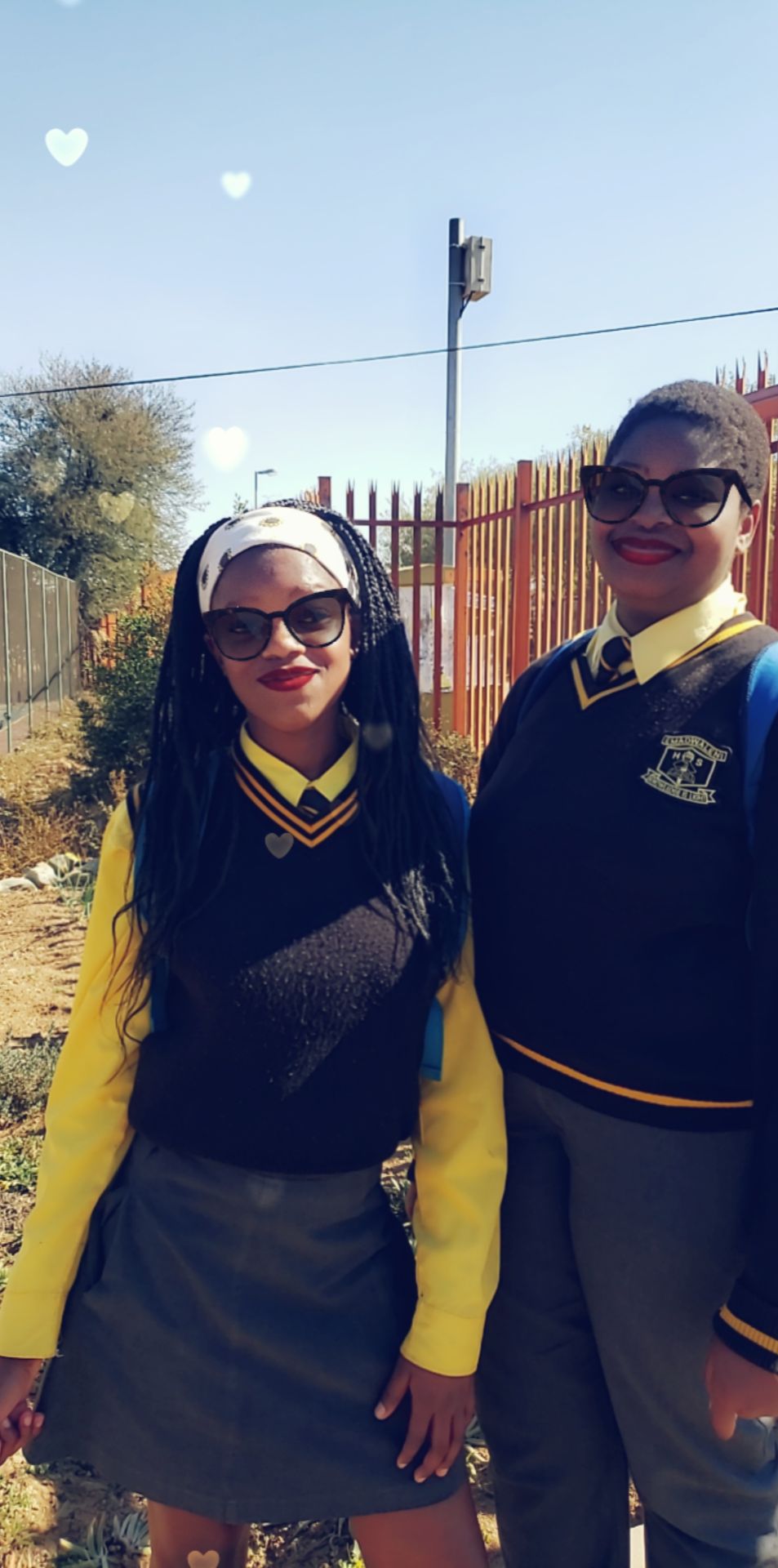
Teboho Trust at Emadwaleni Secondary School

“We travel, some of us forever, to seek other states, other lives, other souls.”-Anaïs Nin

Some of the inequities in South Africa are reflected in the nation state’s education sector. As an example, the wealth gap (a direct result of apartheid) regulates where individuals live, dictates how they are educated and their access to safety and safe-play. Analogous with their counterparts during the apartheid dispensation, the student demographic of the “born-free” generation also experiences disparities between those who are privileged and have access, and those who do not enjoy the same. Director David Rantho of Teboho Trust, also an alumni of Teboho Trust, conducts a weekend program at Emadwaleni Secondary School in Soweto that endeavors to mitigate the adverse effects of economic inequities. Teboho Trust posits they seek to “empower the children and [their] community in order for them to realize their full potential and contribute to the greater society. [Their] overall aim is to provide an empowering environment that will incubate future leaders while at the same time keeping families together.”

If Ibongwe and Kholeka, ( left to right, respectively) are indicators, one can propound that the effectiveness of the program should not be understated. Ibongwe aspires to be a human rights lawyer while Kholeka purposes to be a gynecologist. I learned from Ibongwe that every twenty seven (27) seconds a woman is raped in South Africa. Admittedly, I experienced the remainder of the day in 27 second increments; horrifically aware that another woman was violated. The tragedy of that awareness and the numerous ways many South Africans are robbed of their human rights, or are simply unaware of those rights are some of the impetuses for Ibongwe’s decision to become a human rights attorney. She elucidates in the video below:

Although I met Kholeka and Ibongwe with the explicit instructions to impart knowledge and inspire them to vigorously pursue their goals, I was moved by their dogged determination to succeed, their effervescent personalities and willingness to share their lived experiences. As sisters of the Global South, we exchanged stories of tenacity, grim persistence, and triumph. We traversed the surrounding community and built a rapport based on our shared experiences as only African daughters of developing nations could establish. I found kinship with them as we shared our favorite South African music and the foods they think I should try. Admittedly, my music was dated. I still had Brenda Fassie’s Vulindlela on repeat (The classics are classics for obvious reasons)! They offered many suggestions but Mlindo The Vocalist’s – Macala ft. Kwesta, Thabsie, Sfeesoh is my favorite and now also continuously on repeat. I have no clue what the musicians are singing but I feel the music in my bones.

It would be remiss of me to return to the United States and fail to maintain contact with my sisters. I am keenly interested in and would feel privileged to celebrate with them as they achieve their goals. Despite the odds, I am convinced that in conjunction with their sheer grit, amazing mothers and Teboho Trust, they have the agency and community to succeed.

Sawubona! Ngikhona?!

JFK Terminal 4 Departure

“At its best, travel should challenge our preconceptions and cherished views, cause us to rethink our assumptions, shake us a bit, make us broader minded and more understanding.” –Arthur Frommer

As a self-proclaimed seasoned traveler, I continuously make concerted efforts to embody Frommer’s sentiments. My main objectives often entail a moratorium on expectations, interest in food and food ways, to live like a local for more than fifty percent of the trip, have fun, remember to always check my privilege and be cognizant of possible blind spots. Initially, I envisioned my trip to South Africa would mainly adhere to the previously mentioned tenets. A shift occurred days before departure. The facilitator asked two questions: 1. What are you most curious about for your visit to South Africa? 2. What are your expectations on a personal and/or professional level with respect to your upcoming trip abroad? Since the trip is geared towards service learning, I understood the impetus for the questions but traveling with specific expectations was unconventional for me. Ergo, my responses meant consolidating personal precepts with fulfilling the goals and maintaining the integrity of the trip.

On the day of departure, I reflected on my answers as I gazed out the window of the plane at John F Kennedy (JFK) airport. 1. I am curious about the ways my South African experience will inform my continuously changing world view.

2.  Professionally,  I anticipate that South Africa will shape the ways I  interact with students of varying cultures and truly teach me how to enter the classroom with an open disposition; to simultaneously teach and learn.

I knew if I am to truly experience South African culture, and from that experience learn to enter the classroom with an open disposition willing to learn as I teach, I must begin at the level of language. Since it would be my first sojourn in South Africa, and like strangers intent on becoming familiar, I thought it best to start with greetings. As other passengers boarded, I did a google search for iciZulu greetings. I found:

Sawubona: ‘I see you.

Ngikhona: I am here.

I learned that “inherent in the [ici]Zulu greeting and [its] grateful response, is the sense that until you saw me, I didn’t exist. By recognizing me, you brought me into existence. A Zulu folk saying clarifies this, “Umuntu ngumuntu nagabantu”, meaning, “A person is a person because of other people.”” (Bridget Edwards)

The profundity of the greeting and response is not lost on me; rather it is reflected in the fact that it serves as the title of my initial post and introduction to the blog. Hopefully, the sentiment of truly seeing someone in all of their divinity and humanity (in this case South Africa and South Africans) informs the entire blog as I document my experience.

Sawubona!